
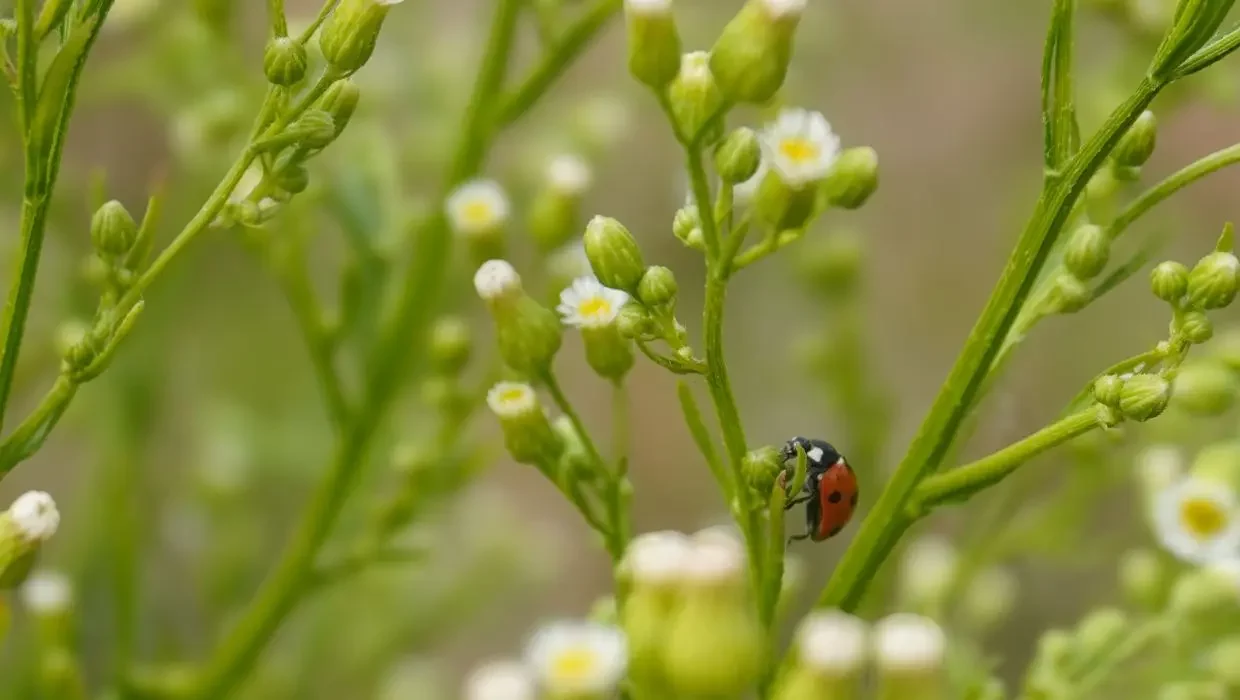
Drawing on the partnership at Ashurst in Kent, Wates Wildscape and Cura Terrae highlight how creating a more ecologically rich landscape benefits both wildlife and the surrounding area.
Biodiversity Net Gain is now the law, but the legislation is the floor, not the ceiling. Drawing on our partnership at Ashurst in Kent, we set out what it really takes to do it well.
By Simon Kennedy, Associate Director, Wates Wildscape, and Andrew Ainsworth, Practice Area Lead – Green Infrastructure, Cura Terrae Land & Nature
Biodiversity Net Gain (BNG) has been part of the planning landscape for a couple of years now, and in that time, it has moved from an idea to a statutory requirement that shapes how development happens in England. While this statutory requirement has been bedded in, we have been working together to bring forward Wates Wildscape’s first habitat site at Ashurst in Kent, one of us as the developer-promoter creating new nature on dedicated land, the other as the environmental consultancy designing and delivering it on the ground. What that experience has taught us, more than anything, is that the hard part of BNG is not hitting the 10 per cent. It is everything that has to be true for a habitat to still be thriving in thirty years’ time.
What BNG is, and why it matters
At its simplest, the principle behind BNG is that development should leave the natural environment in a measurably better state than it found it. Where habitats are lost to development, they are replaced — and then a little more is added on top. That gain is the whole point. It was codified through the Environment Act and became a statutory requirement, with a 10 per cent net gain target now mandated for developments over a certain size in England. The picture is different in Scotland and Wales, where the same legislation does not currently apply in the same way, and the government has confirmed that nationally significant infrastructure projects, the major road and rail routes, power stations and the like, are due to come into scope from November 2026.
But the legislation is really only the mechanism. The reason it matters runs deeper. England is one of the most nature-depleted countries in the world, and our habitats are as diminished as they have ever been. BNG is the first legislation of its kind anywhere internationally to put a quantifiable, mandated target on reversing that decline. For a developer, the 10 per cent is the requirement; but at its core, BNG is about making development genuinely more sustainable, so that the places we build for future generations also leave room for nature to recover. For us at Wates, that direction of travel is more valuable than the target itself.
On-site and off-site — and why off-site can do more
BNG sits within a hierarchy. The first principle is to avoid harming habitats in the first place; the next is to replace what is lost on the development site itself, locally, where you can. On-site landscaping and habitat areas have real value and should sit high in that hierarchy. But there is a limit to what any single development site can achieve, and lines of trees added to soften a scheme do not always deliver the biodiversity value they appear to.
This is where off-site delivery comes in, and where it can genuinely do more. Wates Wildscape concentrates on off-site biodiversity units: we create new nature on land dedicated entirely to that purpose, and developers who cannot generate enough gain within their own red line can secure the units they need from us. Working at that scale lets you do something bigger and better connected to the wider landscape, and it creates space that belongs to nature, free from the everyday pressures of domestic cats and human disturbance that affect habitat on a housing site. That is what making space for nature actually means in practice, and it is one of the reasons this side of the work is so rewarding.
The hard part: getting it right for thirty years
Getting BNG right should be difficult, and it is. There is a persistent perception that you simply plant some trees, sow some grass, and nature takes care of the rest. The reality is that BNG is a minimum thirty-year commitment, planned and executed through a Habitat Management & Maintenance Plan, and backed up by a contractually committed oversight body, who make sure we’re creating the benefits we promised. Delivering a habitat that is mature, self-sustaining and genuinely valuable three decades from now takes careful planning from the very start.
That means understanding the site you are working with, its soils, its hydrology, the habitats in the surrounding landscape, and designing something that not only thrives but belongs, so that in thirty years it looks as though it was always meant to be there. There is no sense planting trees where woodland does not fit, or creating wetland where there is nothing for it to connect to. And once a site is in the ground, it has to be nurtured. Too many schemes fail because trees are simply stuck in the ground and left: planted at the wrong time of year, never watered, and lost. You have to look after these places at the start to get them to the point where they can begin to look after themselves, and you have to plan for a changing climate, because counties like Kent will look very different over the next thirty years.
From our two perspectives, three challenges stand out. The first is expertise: you need deep ecological and land-management knowledge to understand how these habitats interrelate, both with each other and with the wider environment. The second is stewardship and certainty, the confidence that the backing will still be there in year five, year fifteen, year thirty. That is one of the real strengths of delivering these sites within the Wates Group: we are not worried about the money running out before the job is done. The third is the commercials, because this is a genuinely new market and assessing how it will behave takes real judgement. None of it is easy. As one of us is fond of pointing out, we don’t do these things because they are easy, we do them because doing them properly is the challenge worth taking on.
Why partnership matters
When Wates Wildscape went looking for a delivery partner, the requirement was unusual. We needed an organisation that understood two things at once: what we were trying to achieve as a business, and just as importantly, what genuinely good, long-term land management for habitats actually looks like. In a market this new, very few organisations combine strong ecological expertise with proven habitat creation and stewardship, alongside the wider services a complex site demands. We ran a procurement process, and Cura Terrae’s Land & Nature team fitted those requirements by some distance.
What really drew us together, though, was a shared belief that this should be a collaborative relationship rather than a transactional one. BNG is so new that the stakeholders you deal with on a site — the Environment Agency, Natural England, a local planning authority, the Forestry Commission — may themselves be encountering it for the first time, and rarely in exactly the same way twice. You need a partnership that can work through those questions together and build understanding as it goes, not a consultant who offers an opinion and moves on. Beginning with one of the more technically demanding sites we could have chosen has only deepened that.
There is also a third party in this relationship, and a valuable one. Our conservation covenant is overseen by a responsible body, in our case Plantlife, and they hold both of us to account, often to a standard higher than the legislative minimum. It can be demanding, but having an independent organisation, with no commercial stake, making sure a scheme is done exactly right is a genuine safeguard. In a market that can still feel a little like the Wild West, those checks and balances are exactly what keep it honest, and they let both of us stand behind what we deliver and be proud of it.
Ashurst: proof on the ground
Ashurst, our flagship site in Kent, makes the point better than any amount of theory. It is roughly 15 hectares of former arable land, a heavily worked maize field, on the banks of the River Medway, in flood zone three and within the High Weald National Character Area. The easy, commercially attractive route would have been to convert it to improved grassland that could cope with the wet. We chose not to, because the site deserved far more than that, and because doing the ecologically right thing was, in this case, also the more distinctive thing to do commercially.
Instead, we are creating wet woodland, ponds and a riparian buffer of trees along the river that will intercept pollutants and improve water quality downstream. Around two and a half hectares of new woodland will connect fragmented pockets of existing woodland across the landscape, knitting together habitat that bats, birds and amphibians can actually move through, because a habitat is only as useful as the species able to use it. To meet the responsible body’s standard, the grass seed and trees are being sourced from the High Weald itself, so what is established is genuinely of that place. And because the rarer pond and watercourse units we are producing are scarce in an area otherwise saturated with standard medium-distinctiveness grassland and scrub units, the site is both ecologically richer and commercially stronger. Ashurst also delivers benefits well beyond the metric, carbon sequestration, water quality, and the kind of natural-capital value that businesses are increasingly looking to account for through emerging nature-related disclosures. When you unpack it, a site like this is far more than the sum of its parts.
Engage early, and don’t treat it as a tick-box
For developers, our advice is simple but easily overlooked: take BNG seriously, and engage with it as early as possible. It is not a landscaping job bolted on at the end. Your site layout should be shaped by BNG from the earliest design stages, because if you remove high-distinctiveness habitat early on without realising what it is worth, you can find yourself buying back far more expensive, harder-to-source units later. Understanding the relationship between your on-site and off-site requirements from the outset can be the difference of tens or even hundreds of thousands of pounds. Engaging an off-site provider early costs nothing and often adds real value; we would far rather help a developer get it right than watch them pay for getting it wrong.
For landowners considering bringing a site forward, the message is to get genuinely good advice — ecological, commercial and legal — before committing. Understand the land you have and what it can realistically support, what the surrounding landscape needs, and what the local market will actually buy. This is a thirty-year legal commitment that runs with the land, so the risk is real, and the market is still maturing. But the opportunity is real too, both as a business proposition and, more importantly, as a chance to create something genuinely special on land that might otherwise sit idle.
That, in the end, is what keeps us both in this. BNG is complex and it is hard work, but done well it leaves a legacy that long outlasts the people who created it — woodlands that should still be standing in two, three, even four hundred years. We are only at the beginning of what this partnership can achieve, and we think the best of it is still to come.
Get in touch
To talk to Wates Wildscape about off-site Biodiversity Net Gain units or wider advice on bringing sites forward, search Wates Wildscape online or connect with Simon Kennedy on LinkedIn. To discuss BNG assessment, landscape design or habitat delivery with Cura Terrae Land & Nature, visit cura-terrae.com/landnature or get in touch with Andrew Ainsworth and the team.