

We spoke to Lewis John, who supports customers from universities and research institutes with their work on air pollution, climate change, water security and other critical issues.
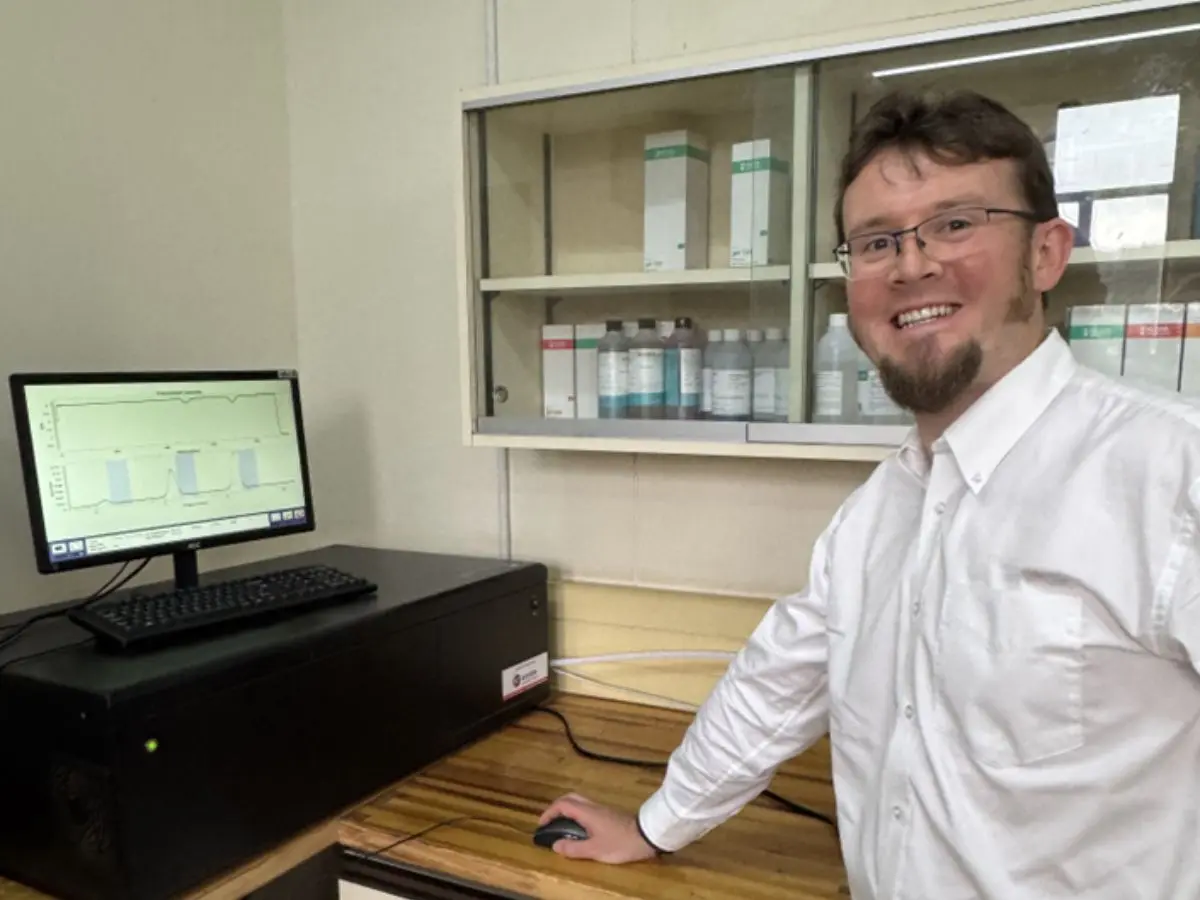
Lewis John is Cura Terrae Air’s UK Sales Manager for Scientific Applications. He studied chemistry at Manchester Metropolitan University, where – able to get very hands on – he discovered a keen interest in instrumentation. When Cura Terrae Air were looking for someone with a scientific background to handle their scientific accounts but who could also develop personal relationships with ease, Lewis fitted the bill perfectly.
In this interview, we discuss the changes in research interests Lewis has seen over his career so far, the major projects he’s supported, and how he works with customers to provide the right instrument for their research goals.
What have been some trends in scientific air monitoring over the past few years?
“I’ve been working in this role for ten years, and initially the focus was very much on greenhouse gas and isotope measurement. Our biggest scientific brand when I first joined the company was ABB Los Gatos Research. We sold a lot of greenhouse gas analysers, some instruments for ammonia and nitrous oxide, but mainly for methane and carbon dioxide.”
Lewis explains that, while these are still amongst Cura Terrae Air’s best-selling scientific products, in the last few years they’ve also partnered with Droplet Measurement Technologies, Aerosol Magee Scientific, and GRIMM Aerosol Technik. The former have an exciting range of LiDARs (Light Detection and Ranging), which use pulsed lasers to remotely monitor atmospheric aerosols. Lewis supplied one of these to staff at the British Antarctic Survey, who used it on the RRS Sir David Attenborough and then deployed it at the Rothera Research Station on the Antarctic Peninsula.
Along with Aerosol Magee Scientific, Droplet Measurement Technologies also produce instruments for measurement of black carbon, carbon particles that strongly absorb light and have adverse impacts on public and climate health. Lewis also highlights the success that’s been had with GRIMM in recent years, including their Scanning Mobility Particle Sizers (SMPSs), which can measure ultrafine nanoparticles.
He talks about the impact of the COVID pandemic on research interests. “I think COVID had something to do with the interest in monitoring finer particles and understanding their distribution, particularly bioaerosols. We’re seeing more interest from people who may have worked on gases in the past and are crossing over. There’s a lot more collaboration and a lot more interest in monitoring PM10, PM2.5, bioaerosols, black carbon, and nanoparticles.”
How do nanoparticles fit in with the other, perhaps more discussed, pollutants, such as particulate matter (PM)?
“Nanoparticles are much smaller. Generally, when we talk about particulate monitoring, we’re talking about PM10, which is particles with an aerodynamic diameter of less than 10 microns, and then PM2.5, which have an aerodynamic diameter of less than 2.5 microns. There’s also some monitoring of PM1, less than one micron, but that’s less common. So nanoparticles are even smaller than that. We’re talking about hundreds of nanometres or tens of nanometres, sometimes even down to 4 nanometres.”
“And the smaller a particle is, the deeper it can reach into the respiratory system. PM10 generally ends up in the trachea and the upper part of the lungs, PM2.5 goes deeper. PM1 and nanoparticles go even further, into the alveoli, and potentially crossing over into the blood or blood-brain barrier. They interact more with the body, and provide more of a vehicle for potentially harmful materials or coatings on the particle to get in.”
“There’re also many more of them. If we’re monitoring a size distribution all the way from the biggest particles at more than 10 microns down to single nanometres, much more of the overall mass is in the larger particles, but there are many more of the smaller ones in terms of counts. And that has implications for health, in terms of how many people are breathing in and how many opportunities there are for pathogens and harmful substances to get into the body.”
Lewis says that there is currently a big interest in nanoparticles from the government, which is being rolled down into funding councils and research groups. In particular, nanoparticles from aviation emissions. “There are a lot of new airport expansion plans which are quite contentious,” he says. “So the data really need to be there and they need to be high quality data provided by something that gives you nanoparticle information and size distribution. That’s where we’ve been successful with GRIMM, and also Palas.”
Understanding nanoparticles isn’t just important from a health perspective though. “It’s also about our general understanding of pollution. Because they make up a large proportion of particles, even though they’re relatively low in mass, they get distributed much more widely. The larger and more mass a particle has, the faster it falls out of the atmosphere and settles. Small particles and nanoparticles, by contrast, can be transported in the upper atmosphere quite long distances, even potentially crossing boundaries into different regulatory areas or countries, which has major implications for climate and pollution modelling.”
What areas do you personally find particularly exciting?
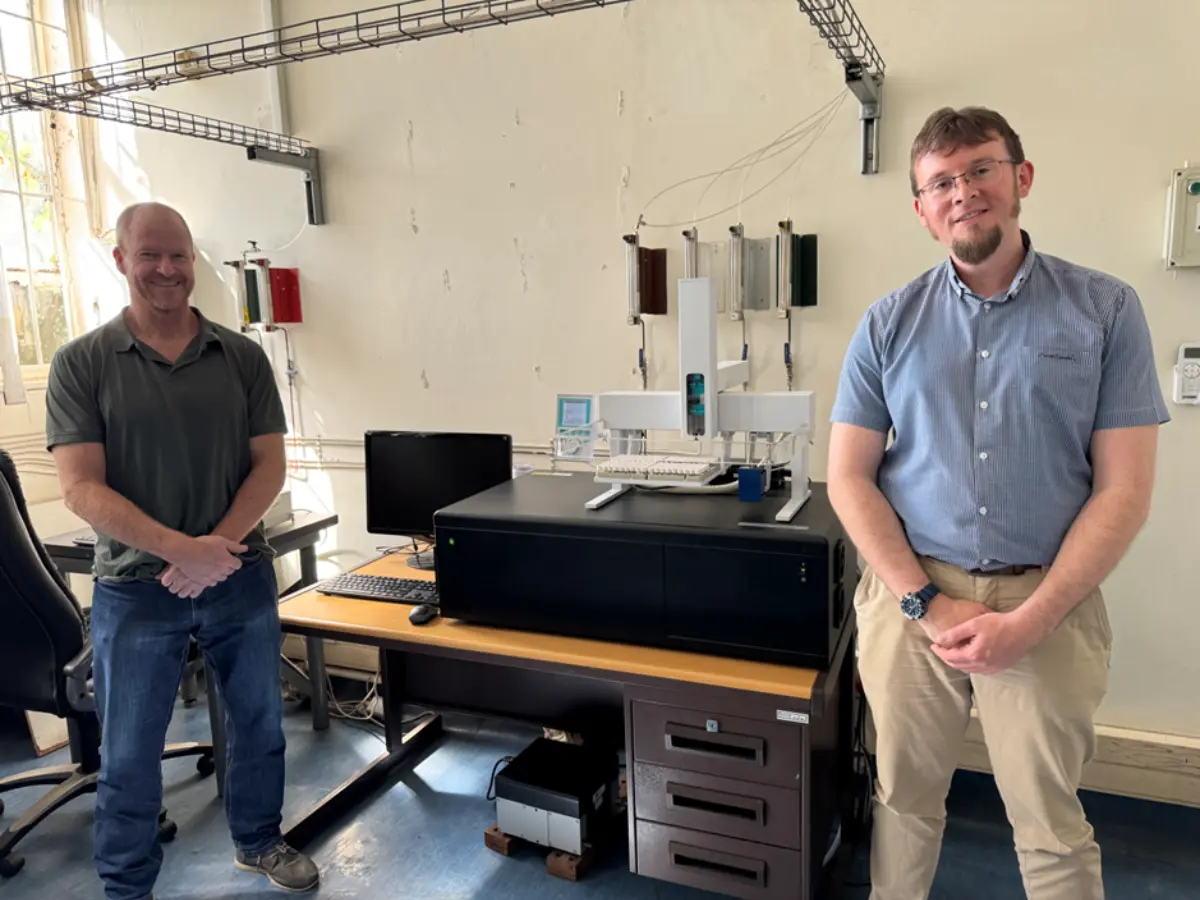
“We have a range of ABB Los Gatos Research [LGR] instruments which are designed for isotopes – isotopes of methane, carbon dioxide, and nitrous oxide, but also isotopes of water. This is where we’ve got quite an unusual instrument, in that all of the other ABB LGR instruments are gas analysers, analysing things in the gas phase. They’re continuously pumping through an optical cavity and measuring the gas in situ as it gets pumped through.”
“The water isotope analyser is quite different because it’s measuring a sample in the liquid phase. So you take these little vials with samples from different waters you want to analyse, maybe from different lakes or periods of precipitation, but they need to be analysed in the gas phase. So tiny aliquots of the samples are injected, vaporised, and the gas that is evolved is measured. So it’s quite a different application of ABB LGR’s Off-Axis ICOS [Integrated Cavity Output Spectroscopy] technology.”
“We have six or so instruments in South Africa, which has issues with drought and water supplies. There’s also a bit of a shortage of research on water isotopes and hydrological systems and how they link together in some of the southern hemisphere. The southern and northern hemispheres don’t mix very much when it comes to the atmosphere and the water bodies. So it’s quite interesting that there’s such a difference in research interests in different areas.”
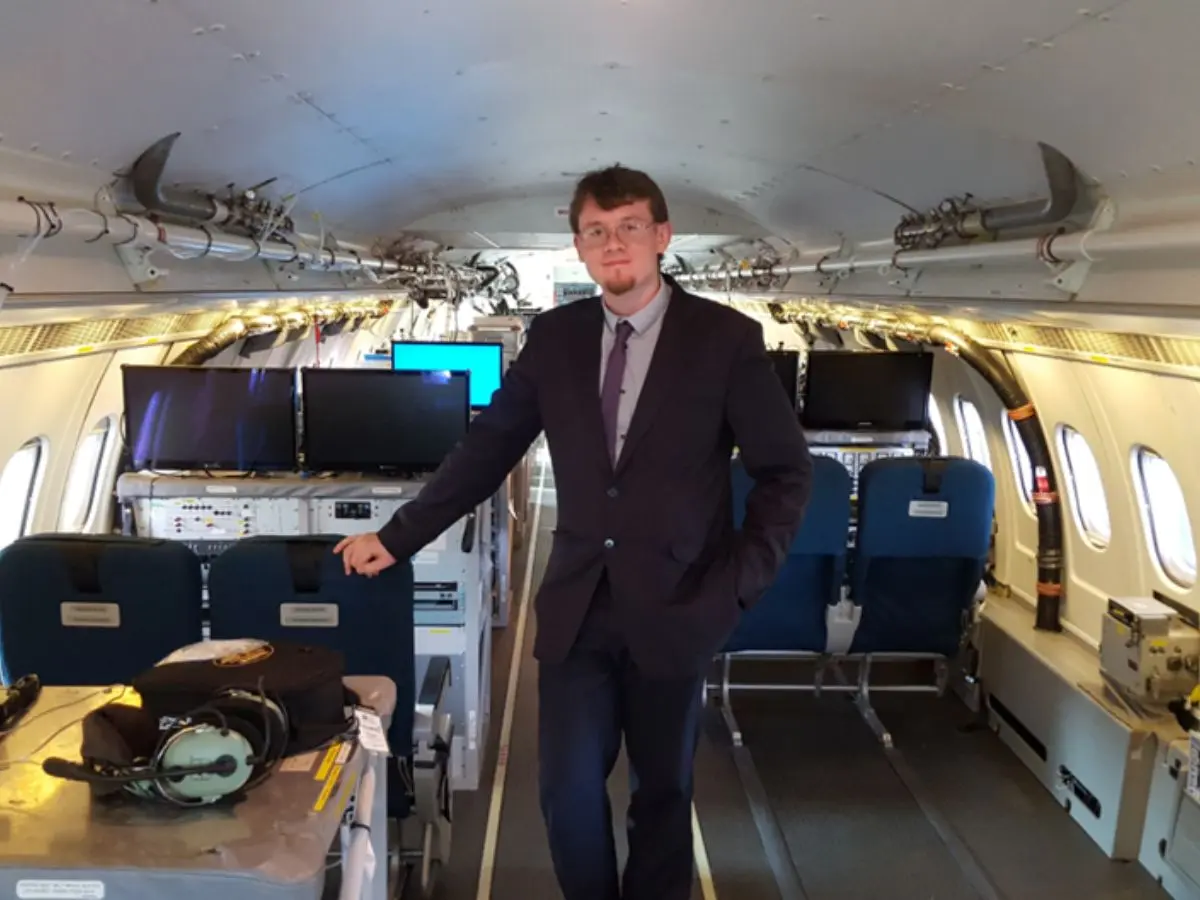
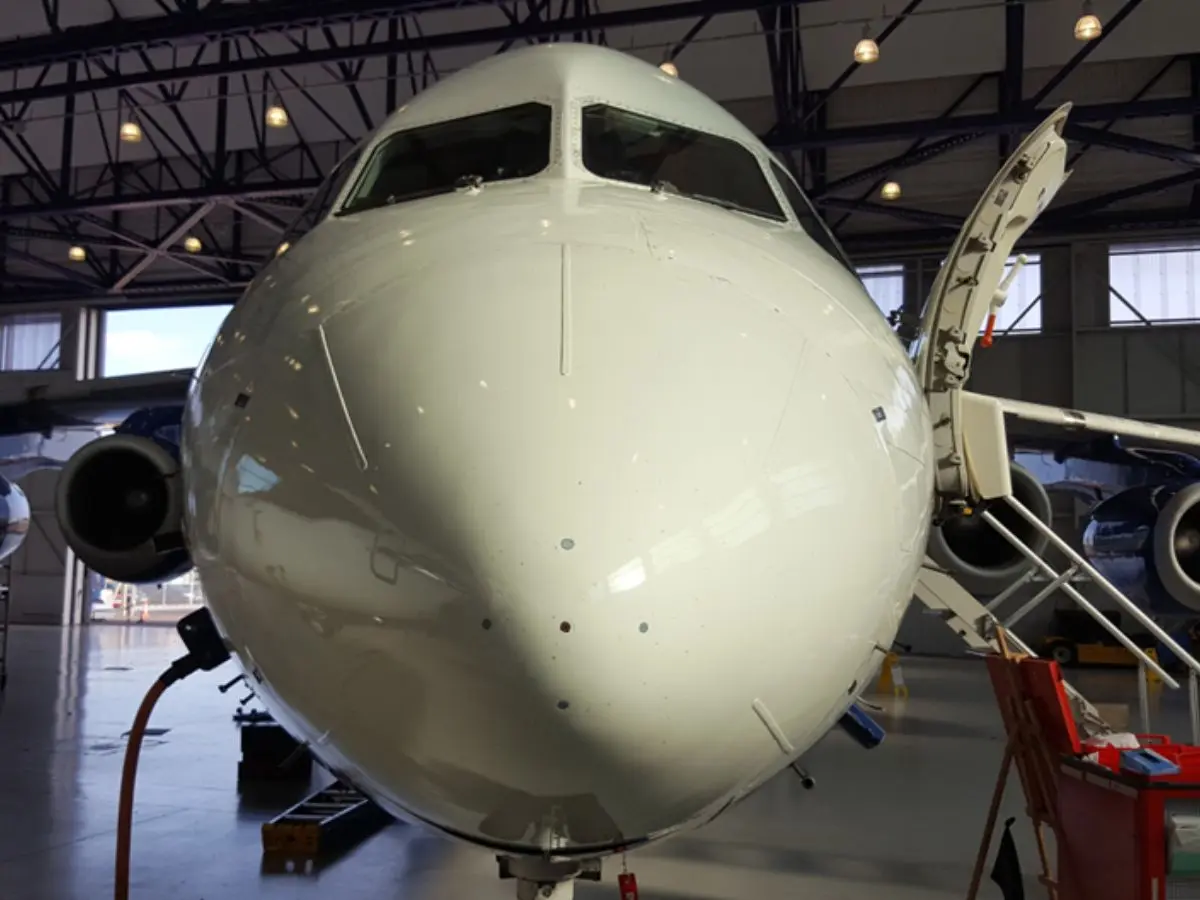
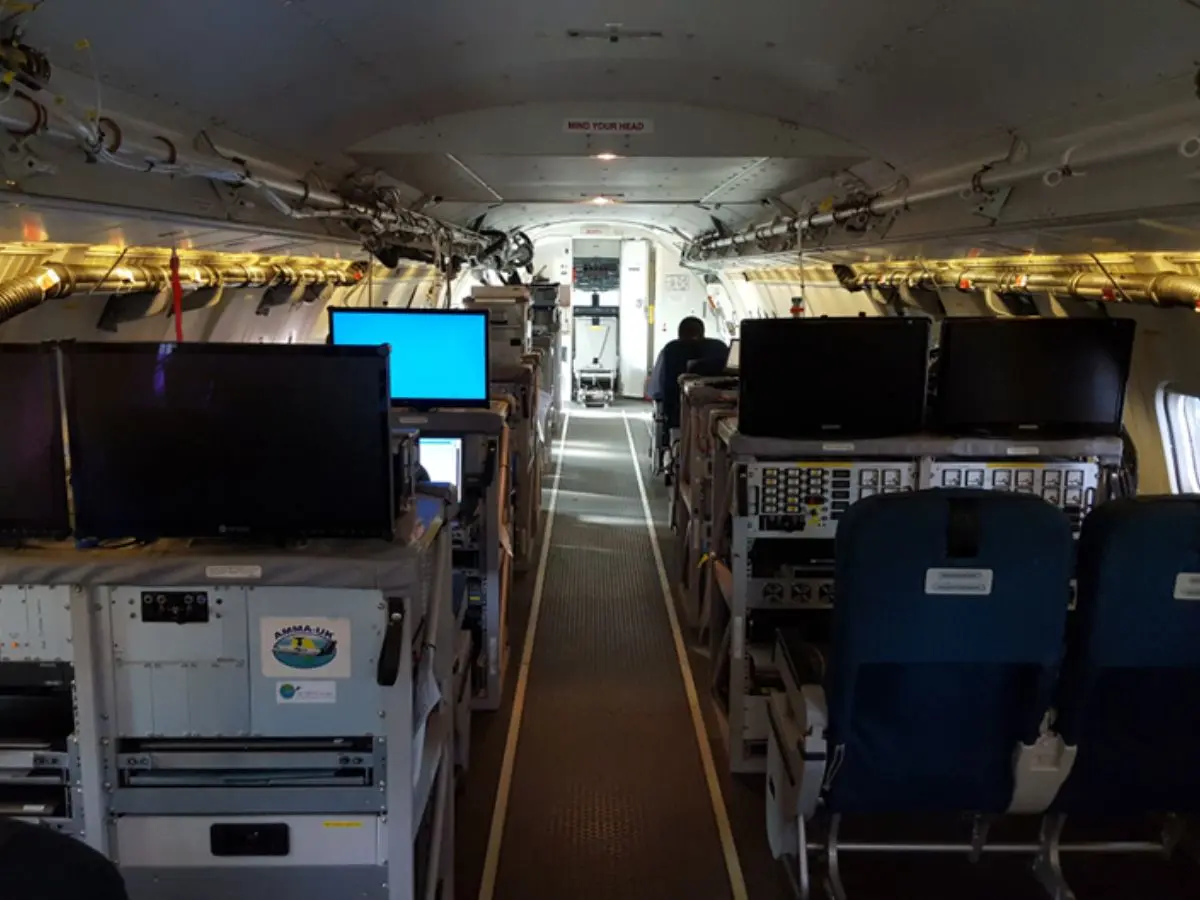
“The other work that I need to mention is the work we did the with the FAAM (Facility for Airborne Atmospheric Measurements) Aircraft at Cranfield University. We had a lot of instruments on there: gas analysers, cloud probes, particulate instruments. During its time it was a really key research institute, and it was quite unique having such a capable research aircraft that goes around the world measuring all sorts of different things, from volcanoes to savannah dust.”
“I was at a conference recently and Professor Hugh Coe at the University of Manchester was talking about how the aircraft had been used to monitor sulphur emissions from ship plumes. There were several shipping lanes and they were investigating the different blends of fuels marine engines burn in different situations to manage their emissions. They were able to check by flying backwards and forwards and doing transects through the plume, sometimes flying very low, and getting these direct measurements that are very difficult to get.”
Sadly, the FAAM Airborne Laboratory ceased to operate at the end of March 2026. Some activities were wound down, and others will transition to alternative facilities or partners.
The Natural Environmenal Research Council (NERC), which funded the FAAM, intends to pivot investment in atmospheric research into new technologies.
Who do you typically work with, and are you able to follow projects from the research stages to publication and impact?
“My role generally entails dealing with enquiries from universities, whether they’re in the UK, Ireland, or other territories, and also research institutes. The National Physical Laboratory for instance, or the UK Centre for Ecology and Hydrology. Any institution or customer that is coming from a research background.”
Lewis explains that it’s a relatively even split between departments of atmospheric chemistry and earth sciences, and humanities – “those who are interested in understanding how pollution interacts with people and society”. For example, air pollution in cities and from transport, rather than climate change and greenhouse gas fluxes from peatbogs. “So it is quite varied and I need to understand a little bit of all of these fields to be able to recommend the right instrument and explain any special considerations for the application,” Lewis says.
Indeed, understanding the researcher’s goals and building a relationship with them is a key part of the job. “Understanding how the instrument works is really important when writing a scientific paper”, Lewis says. The fact that Lewis and his team can hand-deliver the instruments and provide detailed onsite training, as well as troubleshooting and diagnostic checks, is really valued by researchers.
“It takes one of the unknowns and one of the pain points out of the whole process of acquiring new equipment and starting a new major measurement campaign knowing that you have the expertise, the ability to ask any questions, and a more detailed understanding of how the instrument works in theory.”
Often, customers will come back to Lewis a year or two later when the project is finished. “They’ll let me know how things are going and sometimes I can go look at the research aircraft or the measurement site. It’s always really fulfilling to see that the instrumentation we’ve sold is making an impact and making things a little bit easier for these people who have really impactful work to do.”
Lewis and the team also have very good relationships with their suppliers. “They’re very supportive and have very quick and responsive remote troubleshooting and logins that they can do, and they’re genuinely interested in what scientists are doing.” Still, the team are able to handle a lot in-house. “If somebody is out in the Amazon or in a peat bog somewhere and they contaminate the optics, which is the most common issue we see, we’re able to get that turned around very quickly and the customer doesn’t have to send the system back to the supplier. So that’s very important in minimising downtime.”
Do you have any specific projects that have been favourites?
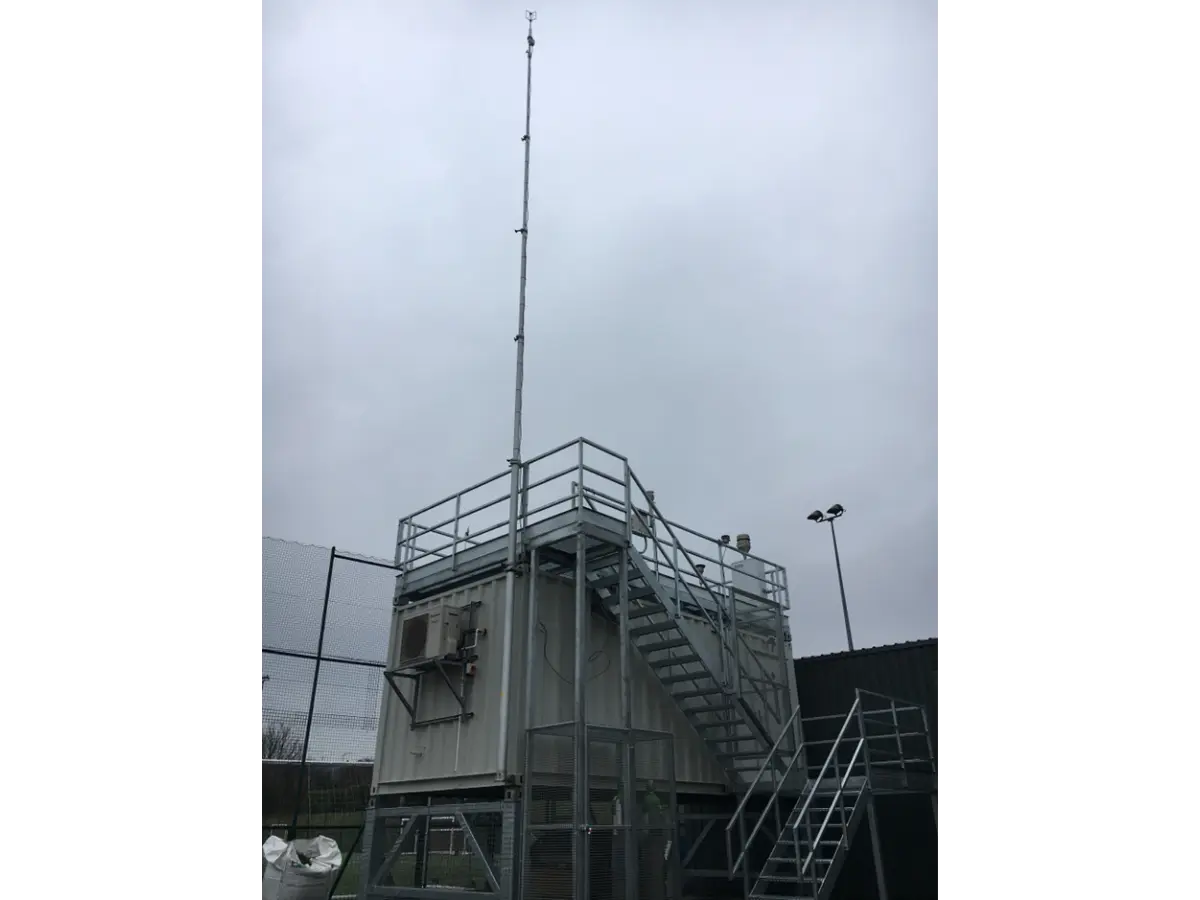
“We had a major project in 2017, which was supplying the NERC [Natural Environment Research Council] air quality monitoring supersites. They were constructed on the campuses of three key universities or their satellite sites. One was the University of Manchester, in the Fallowfield area. It’s a satellite campus and it’s also very close to where I used to live when I was studying in Manchester, which was a nice tie in.”
“There’s also one at the University of Birmingham and one that was originally purchased by King’s College London but is now run by the Environmental Research Group at Imperial College London. For each of them, we supplied two ABB LGR gas analysers, one for ammonia and one for measuring carbon gases, so carbon monoxide, carbon dioxide, and methane. They also bought Teledyne gas analysers, which weren’t all exactly the same spec, but generally were ozone analysers, SO2 or H2S/SO2 analysers, and NOY analysers, which is essentially a NOx analyser measuring nitrogen dioxide and nitrous oxide, but it has an external converter so it can measure more unusual and less understood nitrogen compounds.”
“So it was a very comprehensive suite of gas instruments, a nice combination to be all supplied by us, a rack of Teledynes and a rack of ABB LGR instruments. And there were also some other purchases, some high volume samplers for measuring particulates and doing post analysis. There were also some very high-end instruments from other supply companies dotted around in the enclosures, too. So they really are super sites.”
“They’ve been running continuously ever since and we’ve done a lot of servicing on those instruments to keep them up and running. There has been a lot of fruitful research that has come out of them and the sites have become reference points where researchers will bring other instruments in to compare or use the data. So they’ve been very impactful for the scientific community. Having long-term measurements is important, and it’s really beneficial to see the effects of the changes going on around the campuses, like development and building. You can draw all sorts of conclusions from these long data sets and that’s really significant.”
Reflecting on projects such as this, Lewis says how important the instruments Cura Terrae Air supply – and knowledge of them – are in bringing tangible benefits to society and humanity, as well as to researchers’ work and their career progression. “I’m very grateful and I find it very fulfilling to be able to support these researchers, be involved in the work they do and have some sort of positive effect myself in supporting them”.
View our range of scientific and research instrumentation here or get in touch with Lewis.